
Cert III Automotive Diesel Engine Technology in Brisbane
- Learn while you work
- Mobile, on-time trainers
- Customised, hands-on courses
Contact Us
Contact Us
Thank you for contacting Oceania College of Technology.
We will get back to you as soon as possible.
Please try again later.
AUR31520
Certificate III in Automotive Diesel Engine Technology
Cricos Course Code: 103597J
Diesel engines power everything from trucks to heavy machinery, and skilled technicians are always in demand. The Certificate III in Automotive Diesel Engine Technology at Oceania College of Technology in Brisbane is your pathway to a trade qualification focused on diagnosing, servicing, and repairing diesel-powered vehicles and equipment.
This nationally recognised course is designed for those looking to gain hands-on experience with diesel engines used in commercial vehicles, transport fleets, and heavy-duty systems. You’ll learn directly from experienced trainers who deliver real-world knowledge on-site or in a workshop setting, using current tools, techniques, and technology.
Ready to become a qualified diesel technician? Call
1800 623 2642 and talk to our team about getting started.
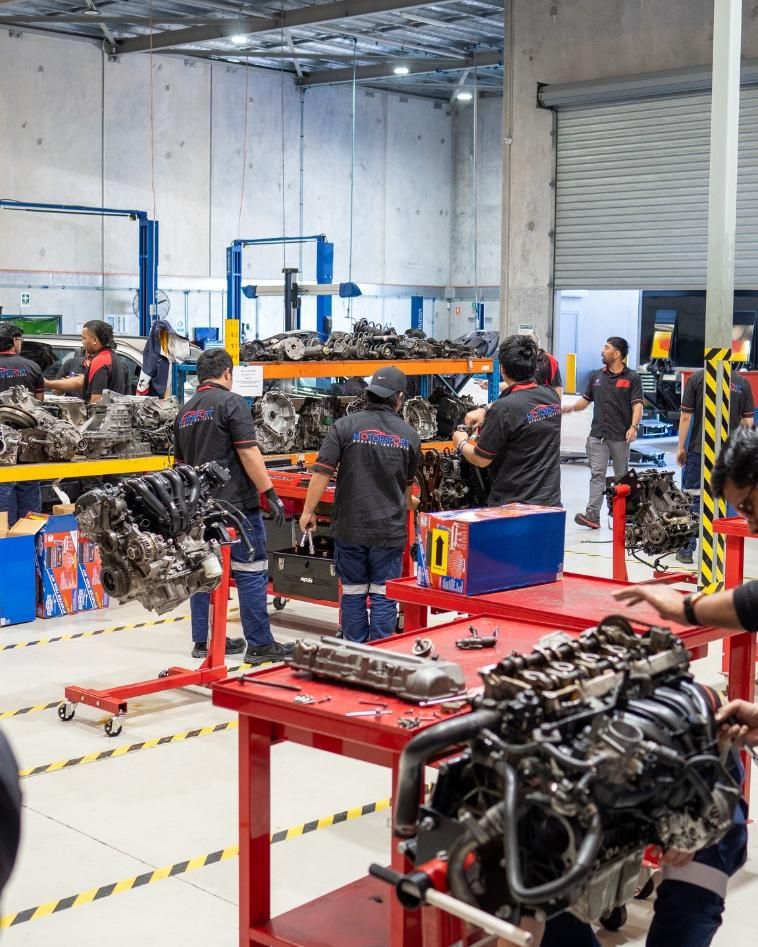
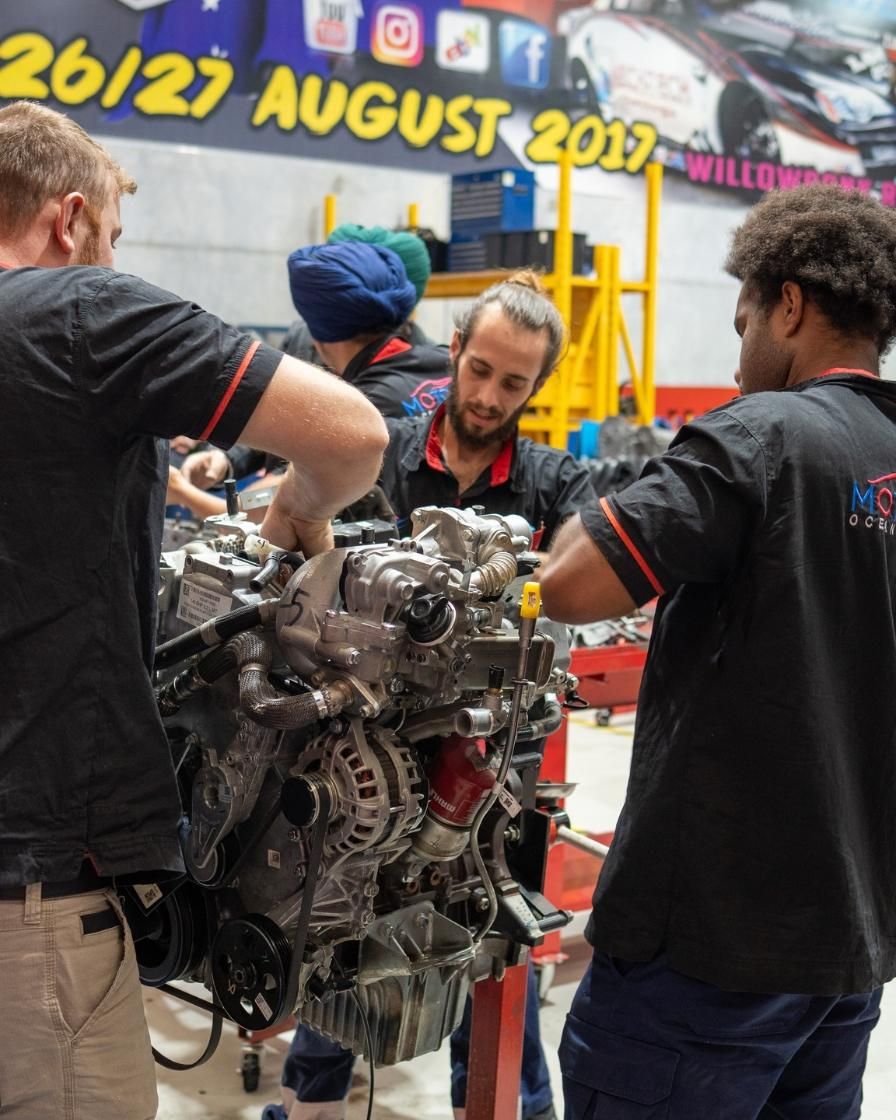
Train for a Future in Diesel Diagnostics & Repairs
This course covers a wide range of essential diesel-specific skills, including inspecting and repairing fuel injection systems, cooling and exhaust systems, engine tuning, diagnostics, and fault rectification. You'll also learn how to use diagnostic equipment and follow strict safety and compliance procedures relevant to diesel vehicles.
Whether you're an apprentice or studying independently, we deliver training across Brisbane, Sydney, and the Gold Coast, offering flexible options that work around your schedule. With our on-time, mobile trainers and workplace-based learning, you’ll gain practical experience in real working conditions while progressing toward your qualification.
Interested in building a career in diesel mechanics? Call Oceania College of Technology today on
1800 623 2642 to find the right fit for you.
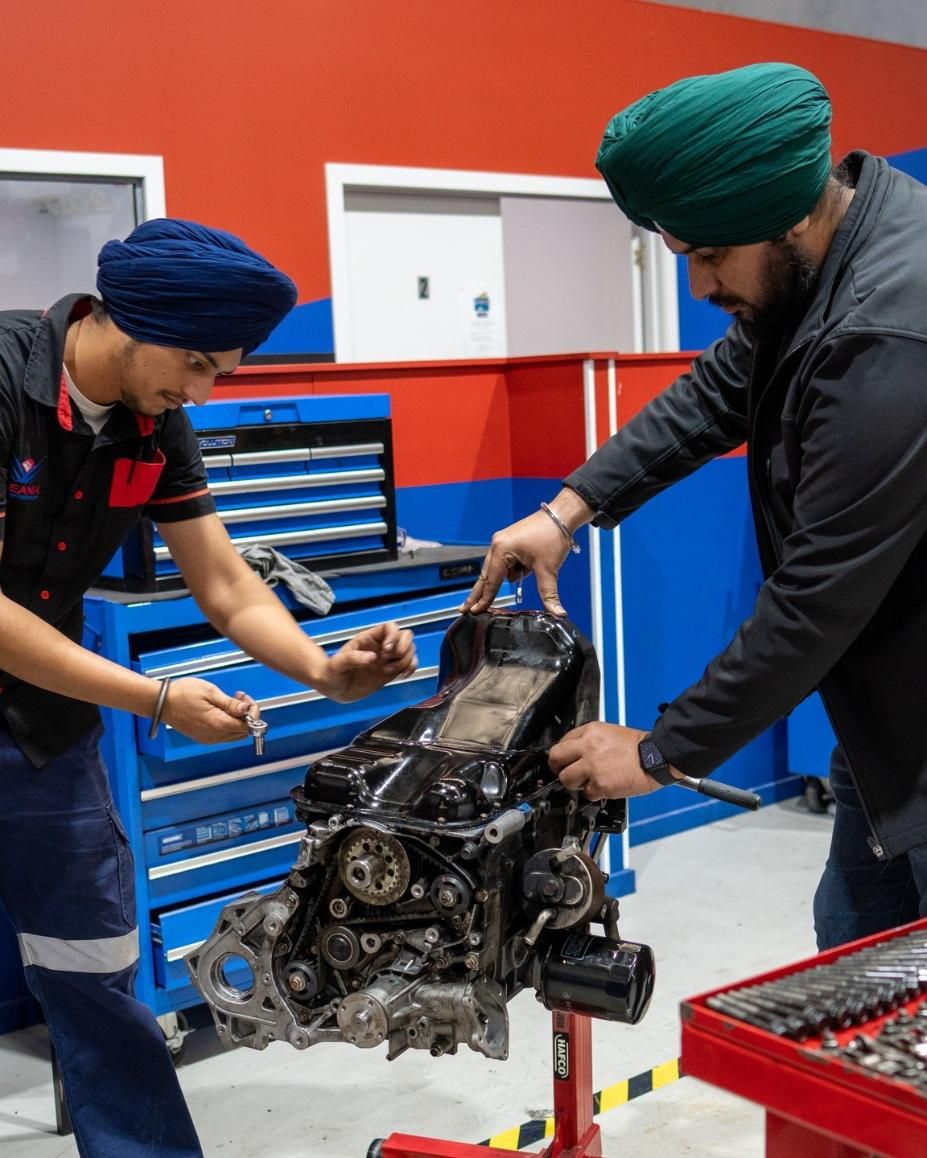
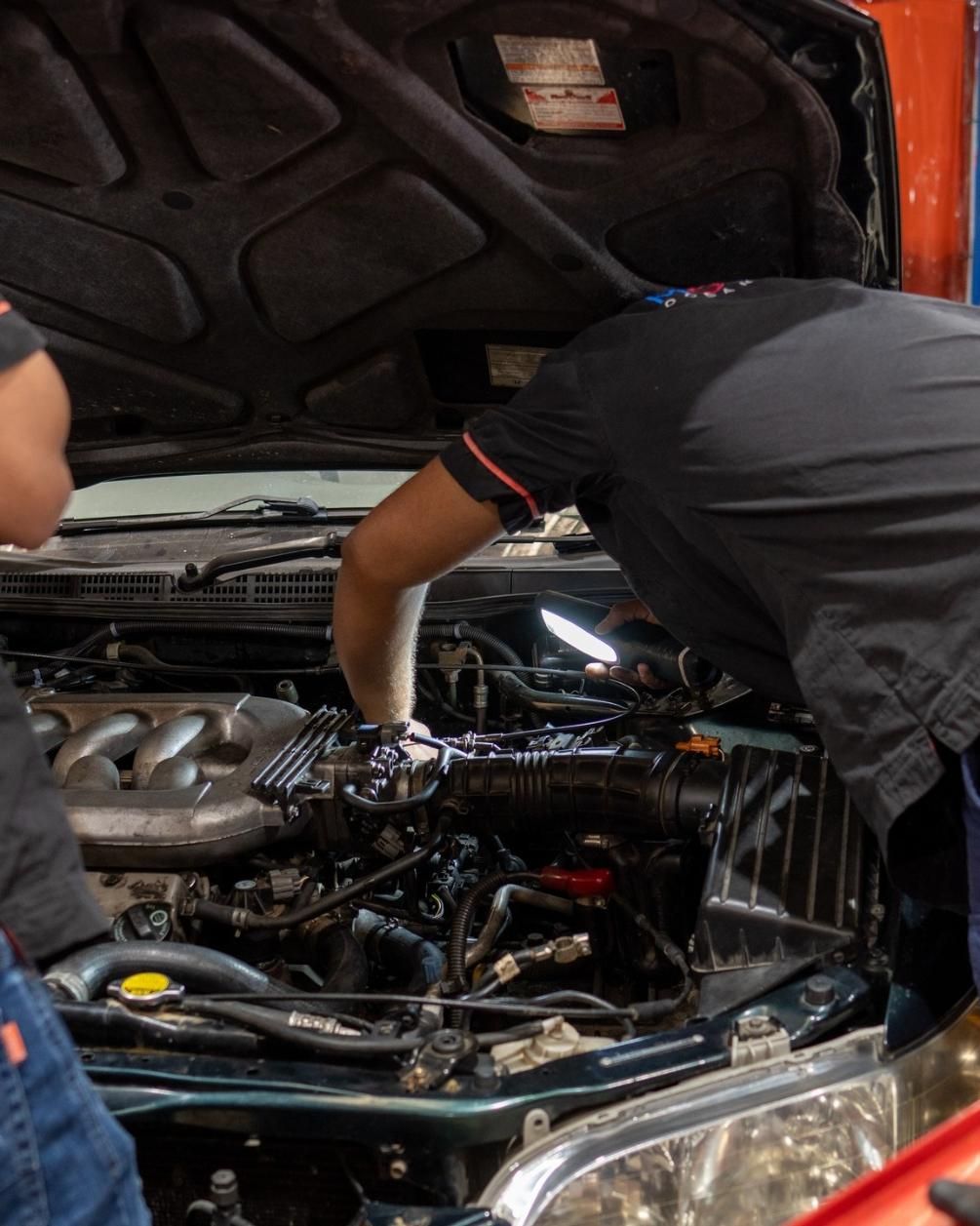
Course Duration & Intake Dates
This qualification will be delivered over 78 weeks of training and assessment and 8 weeks of holidays.
Note that supplementary classes will be scheduled, and attendance required, should additional classes be required to allow for classes missed as a result of public holidays, or other interruptions, and/or for students who require further training and/or reassessment or additional support.
- Contact OCT staff for further information
What will I study?
Total number of 28 units are required for the award of the AUR31520 – Certificate III in Automotive Diesel Engine Technology.
Core units: 14 units
Elective units: 14 units, of which:
- all 14 units may be from the elective units listed in the AUR31520 qualification.
- up to 5 units may be from a Certificate II qualification or above in this Training Package or another endorsed Training Package or accredited course.
Elective units chosen must be relevant to the work environment and the qualification, maintain the overall integrity of the AQF alignment, not duplicate the outcome of another unit chosen for the qualification, and contribute to a valid vocational outcome.
| Unit Code | Unit Title | Core/ Elective |
|---|---|---|
| AURAEA002 | Follow environmental and sustainability best practice in an automotive workplace | Core |
| AURASA102 | Follow safe working practices in an automotive workplace | Core |
| AURETR112 | Test and repair basic electrical circuits | Core |
| AURETR125 | Test, charge and replace batteries and jump-start vehicles | Core |
| AURHTE102 | Diagnose and repair heavy vehicle compression ignition engines | Core |
| AURHTF102 | Diagnose and repair heavy vehicle diesel fuel injection systems | Core |
| AURTTA104 | Carry out servicing operations | Core |
| AURTTA118 | Develop and carry out diagnostic test strategies | Core |
| AURTTE104 | Inspect and service engines | Core |
| AURTTK001 | Use and maintain measuring equipment in an automotive workplace | Core |
| AURTTK102 | Use and maintain tools and equipment in an automotive workplace | Core |
| AURTTM004 | Assemble engine blocks and sub-assemblies | Core |
| AURTTM008 | Dismantle and evaluate engine blocks and sub-assemblies | Core |
| AURTTM011 | Recondition engine cylinder heads | Core |
| AURAFA103 | Communicate effectively in an automotive workplace | Elective |
| AURAMA001 | Work effectively with others in an automotive workplace | Elective |
| AURETR124 | Diagnose and repair compression ignition engine management systems | Elective |
| AURETR128 | Diagnose and repair instruments and warning systems | Elective |
| AURETR129 | Diagnose and repair charging systems | Elective |
| AURETR130 | Diagnose and repair starting systems | Elective |
| AURETR132 | Diagnose and repair automotive electrical systems | Elective |
| AURHTE001 | Remove and install heavy vehicle engine assemblies | Elective |
| AURHTX104 | Diagnose and repair heavy vehicle clutch systems | Elective |
| AURHTZ101 | Diagnose and repair heavy vehicle emission control systems | Elective |
| AURMTE101 | Test engines using a dynamometer | Elective |
| AURTTA105 | Select and use bearings, seals, gaskets, sealants and adhesives | Elective |
| AURTTF102 | Inspect and service diesel fuel injection systems | Elective |
| AURTTF105 | Diagnose and repair engine forced-induction systems | Elective |
Entry Requirements
Although the training package does not stipulate any entry requirements for this training product.
OCT has the following entry requirements in place for international students:
- be at least 18 years of age.
- participate in a course entry interview (pre-enrolment review) to determine suitability of the course and additional support needs.
- undertake OCT’s ACSF LLN assessment.
English Language Proficiency Requirements
You must have completed the English language test within the two (2) years of the application date.
The table below shows the English language test providers, including information on English Language Intensive Courses for Overseas Students (ELICOS) and the minimum overall band scores you must achieve to meet the Student visa English language requirement, which will also be used as the English Language proficiency requirement for entry into this course by OCT in addition to its ACSF level LLND Test.
| English language test providers | Minimum test score | Minimum test score with either 10 weeks of ELICOS, Foundation Standard program or Pathway program | Minimum test score with either 20 weeks ELICOS or Foundation Extended program |
|---|---|---|---|
| International English Language Testing System (IELTS) | 6 | 5.5 | 5 |
| TOEFL internet-based test (only accepted if test is taken on or before 25 July 2023)* | 64 | 46 | 35 |
| Cambridge English: Advanced (Certificate in Advanced English)** | 169 | 162 | 154 |
| Pearson Test of English Academic (PTE Academic) | 50 | 42 | 36 |
| Occupational English Test | B for each test component | B for each test component | B for each test component |
*On 26 July 2023 the TOEFL internet-based test (TOEFL iBT) stopped offering English language tests for Australian visa purposes. A score for a TOEFL iBT test taken on or after 26 July 2023 will no longer satisfy the English language requirement for Student visa purposes. Only TOEFL iBT scores from a test taken on or before 25 July 2023 are accepted for Student visa purposes.
**From 12 February 2024, only results from the paper-based Cambridge C1 Advanced test (previously known as Cambridge English: Advanced CAE) will be accepted for Australian visa and migration purposes. Test scores for both C1 Advanced paper-based and computer-based tests, taken before 12 February 2024, within the specified validity period are still accepted.
English Language test evidence exemption
You do not need to provide evidence of an English test score with your visa application if one of the following applies:
- you are a citizen and hold a passport from UK*, USA, Canada, NZ or Republic of Ireland
- you are an applicant who is a Foreign Affairs or, Defence sponsored student or a Secondary Exchange student (AASES)
- you are enrolled in a principal course of study that is a registered school course, a standalone English Language Intensive Course for Overseas Students (ELICOS), a course registered to be delivered in a language other than English, or a registered post-graduate research course
- you have completed at least 5 years’ study in English in one or more of the following countries: Australia, UK, USA, Canada, New Zealand, South Africa, or the Republic of Ireland
- in the 2 years before applying for the student visa, you completed, in Australia and in the English language, either the Senior Secondary Certificate of Education or a substantial component of a course leading to a qualification from the Australian Qualifications Framework at the Certificate IV or higher level, while you held a student visa.
Note: You may be required to provide evidence of an English test score with your visa application if you hold a British National Overseas (BNO) passport.
If you are exempt from providing an English test score, you will be required to provide evidence of the same and may be required to complete an English Placement Test conducted by OCT.
Study Assessment and Pathway
OCT operates on a rolling intake timetable. Although no units in this qualification have any pre-requisites, OCT has adopted a stage based rolling intake where all students must complete the units in the initial stage listed below prior to merging these students with older students in ongoing classes. OCT runs these units on an ongoing basis depending on student enrolments and commencements. Students can commence their course in any of the following units and in any order. Once, the students have completed the following units they will be merged with older students. Each student will be provided with their individual training and assessment plan outlining their timetable.
- AURAEA002 Follow environmental and sustainability best practice in an automotive workplace
- AURASA102 Follow safe working practices in an automotive workplace
- AURTTK102 Use and maintain tools and equipment in an automotive workplace
- AURAFA103 Communicate effectively in an automotive workplace
Required Textbook: Jones and Bartlett Learning (CDX Automotive):
- Medium/Heavy Duty Diesel Engines by Gus Wright
Textbooks are available in the library for you to read in your own time. However, you will be required to buy your own from McGraw Hill to ensure you always have access to the textbook. OCT can arrange the textbook for you, please get in touch with student support if you need assistance with this.
You will be provided with your own apprentice toolkit which you will be required to bring to all practical classes. You will also be provided with a uniform which must be worn for all workshop days.
You must buy your own Safety Boots and bring them to each practical class. You will be provided with a timetable that will identify the days you will be attending workshop-based training and assessment.
Student Support Services
OCT has a range of Student Support Services available for you. Please refer to your student handbook for details on available Student Support Services.
Assessment System
Units are assessed individually via a range of assessment methods: Written Assessment, Verbal Questioning and Practical Demonstrations observed directly by the assessor.
Recognition of Prior Learning (RPL) and Credit Transfers (CT)
The RTO offers all students the opportunity to apply for Recognition of Prior Learning (RPL).
Assessment Appeals
Students can make an appeal against any assessment decision by following the Complaints and Appeals Policy outlined in the Student Handbook and our website.
All appeals and complaints will be dealt with following the Complaints and Appeals Procedure.
Course Price
Contact Oceania College of Technology or your education agent for prices, promotional offers and incentives that may be available.
Ph: 1800 623 2642 Email: admin@oct.edu.au
Payment plans are available with weekly, monthly, term or semester payment options.


